

Faculty of Postgraduate Studies
Undergraduate Programme
BA (Hons) Early Childhood Studies (Top Up)
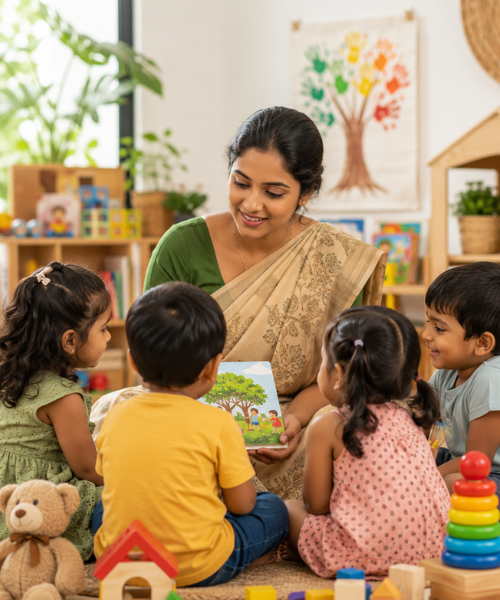
The University of Wolverhampton’s Institute of Education is a respected centre of excellence in educational studies, with a strong tradition of preparing graduates for impactful careers across the education and early years sectors. In partnership with Colombo International Institute of Higher Education (CIIHE), the BA (Hons) Early Childhood Studies (Top Up) programme offers students in Sri Lanka access to internationally recognised British education, grounded in contemporary research and professional practice.
The BA (Hons) Early Childhood Studies (Top Up) programme is designed to equip students with a deep understanding of early childhood development, learning, and educational practice. With a strong focus on reflective and evidence-based learning, this programme features industry-relevant modules covering areas such as evaluating early years curricula, understanding diverse perspectives on childhood, leading quality in educational settings, and recognising the vital role of play in children’s learning and development. Students also benefit from internationally benchmarked teaching standards and dedicated academic support throughout their studies.
Join the BA (Hons) Early Childhood Studies (Top Up) programme at CIIHE today and take the next step toward building a rewarding, future-ready career in the ever-growing field of early childhood education.
The BA (Hons) Early Childhood Studies (Top Up) programme provides students with a deep understanding of early childhood development, learning and educational practice. Through a blend of theory and practical application, the programme prepares graduates to become confident, skilled and reflective professionals within the early years sector. Students will explore key areas such as evaluating early years curricula, understanding diverse perspectives on childhood, leading quality in educational settings and recognising the importance of play in children’s learning and development. Each module is designed to strengthen knowledge, enhance professional practice and support career progression within early childhood education.
Entry Requirements
- Level 4 and 5 Diploma or Level 5 Extended Diploma or Higher National Diploma (HND) in the relevant discipline with 240 Credits or equivalent AND
- ‘C’ Pass in English at G.C.E O/L
Duration
- 12 Months
Awarded by

The Dissertation module represents the culmination of academic study at Level 6, building upon the knowledge and research foundations developed throughout the programme. Students are supported by a dedicated supervisor to design and conduct an independent research project in an area of personal and professional interest within early childhood. The module develops advanced skills in research design, data collection, critical analysis, and academic writing. Students have the opportunity to choose from a range of assessment formats, including a traditional dissertation or an interview-based presentation of findings, allowing for a flexible and personalised approach to scholarly inquiry.
The Evaluating the Early Years Curriculum module examines the structure, philosophy, and effectiveness of early years curricula from both national and international perspectives. Students will critically compare provision offered in the United Kingdom with approaches adopted globally, exploring the social, cultural, and political factors that shape curriculum design. Topics include government policy, curriculum ideologies, professional training standards, and the evaluation of provision against current research evidence and national guidelines. The aim of this module is to equip students with the analytical tools necessary to assess and reflect critically on early years curriculum frameworks in a range of professional contexts.
The Perspectives on Children and Childhood module explores the diverse theoretical, historical, and sociocultural frameworks through which childhood is understood and experienced. Students will draw on subject areas including psychology, sociology, history, health, welfare, law, and social policy to examine the processes that shape the lives of babies, young children, and their families. Topics include ethical principles, children’s rights, multi-agency working, and the influence of political and economic factors on childhood. The aim of this module is to develop students’ capacity to critically analyse and articulate multiple perspectives on childhood, fostering a deeper understanding of the complex contexts in which children grow and develop.
The Leading Quality in Practice module explores the principles and processes involved in leading and developing high-quality provision within early childhood settings. Students will critically appraise theories, concepts, and frameworks related to educational leadership and evaluate how these can be applied to sustain and improve practice with babies and young children. Topics include sustainable development in early childhood education, children’s well-being, professional identity, and reflective leadership. Students will also have the opportunity to critically examine their own professional development as aspiring leaders in early years settings. The aim of this module is to develop students’ competence and confidence as reflective, evidence-informed leaders committed to excellence in early years practice.
The Pedagogy of Play module examines the critical role of play in children’s learning, development, and well-being. Students will explore a range of theoretical perspectives on play, drawing on current research and literature to analyse different types of play, play behaviours, child-initiated activity, and adult-directed approaches. Topics include inclusive play provision, outdoor play, playful pedagogical approaches, and the practitioner’s role in planning and facilitating meaningful play experiences. Students will also have the opportunity to critically reflect on their own practice in relation to play and consider how to engage with children respectfully and responsively. The aim of this module is to strengthen students’ understanding of play as a fundamental pedagogical tool and to enhance their ability to create rich, inclusive play environments within early years settings.